 Why Do Feelings Come in Different Sizes?
This is the text version of the interactive 3D documentary. 한국어
Contents · Chapter 3 Riding the wave
Naming it
Splitting “I’m annoyed” into parts lowers it a little
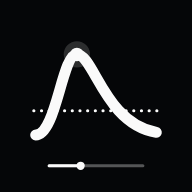
Breaking down “I’m annoyed”
Instead of just “I’m annoyed,” try saying “I’m hurt, tired and a bit embarrassed.” The wave gets a little lower and settles faster, like the blue line. When you give a feeling the right name, you see what caused it and what you can do. The effect is not huge, but you can do it anytime, anywhere.
Why?In one experiment, people looked at angry or scared faces and chose the right feeling word. Their alarm reacted less, and the brake part of the brain worked more. Other studies found that people who name their feelings in fine detail were less likely to drink too much or lash out when things got hard.
Go furtherIn 2007, Matthew Lieberman’s team at UCLA showed the effect of naming feelings with brain scans. The skill of telling feelings apart in detail is called emotional granularity, and researchers think it can grow with practice. The blue line is an illustrative model that does not exaggerate the effect.
View in 3D →Read more: Lieberman et al. (2007), Psychological Science — putting feelings into words · Kashdan, Barrett & McKnight (2015) — emotion differentiation